How to Stop Puppy Biting (Without Making It Worse)
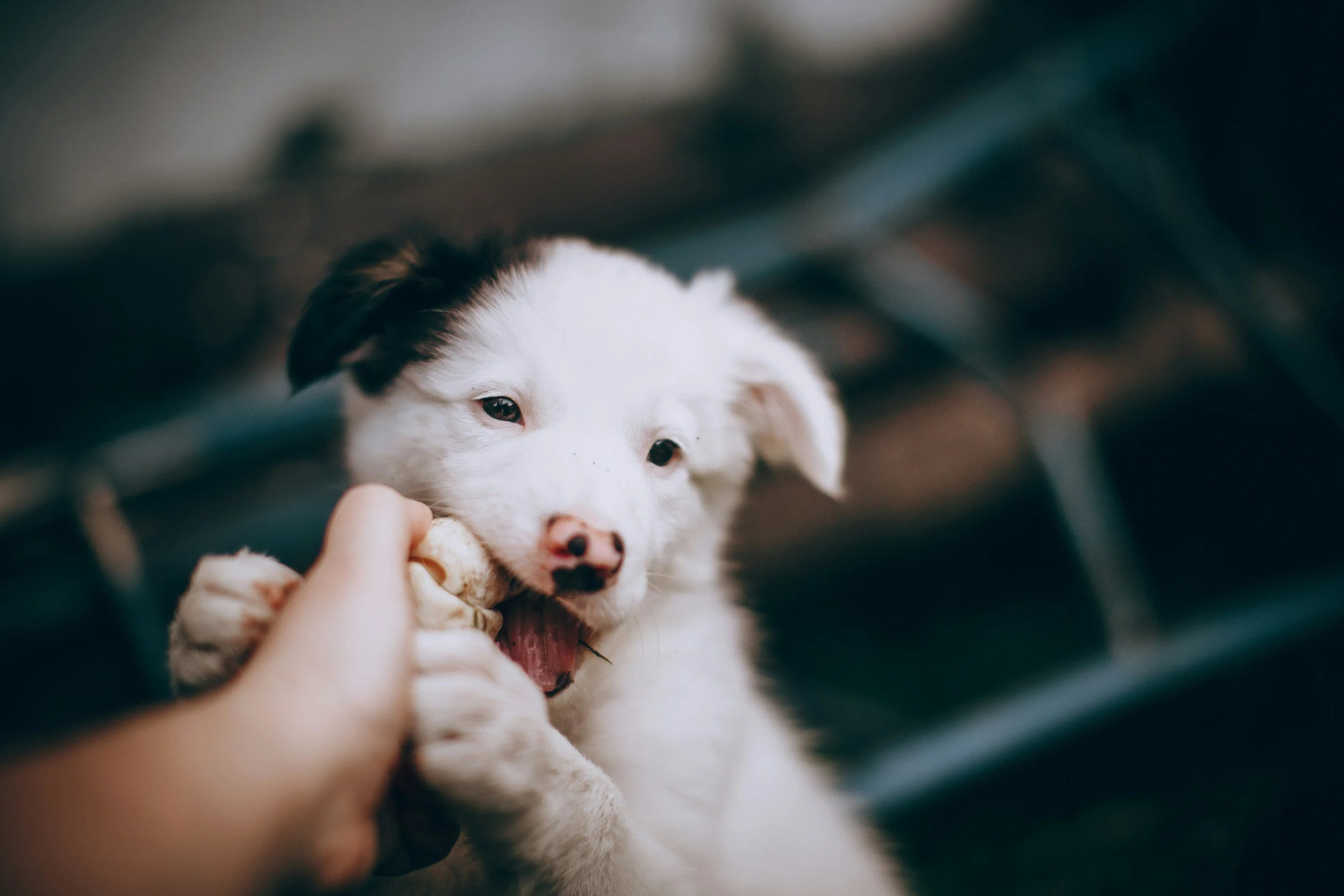
If you have a puppy in Huntsville or Nashville, you’ve probably asked:
“Why is my puppy biting so much?”
Shark teeth. Constant nipping. Grabbing clothes. Attacking hands.
The good news?
Puppy biting is normal.
The bad news?
If you handle it incorrectly, it can turn into a long-term habit.
Let’s talk about what’s actually happening — and how to handle it the right way.
Why Puppies Bite
Puppies bite for a few main reasons:
Teething discomfort
Play and excitement
Overstimulation
Lack of impulse control
Not knowing what’s appropriate to chew
Biting is how puppies explore the world. It’s not aggression.
But it does need direction.
The Goal Is Not “No Biting” — It’s Appropriate Chewing
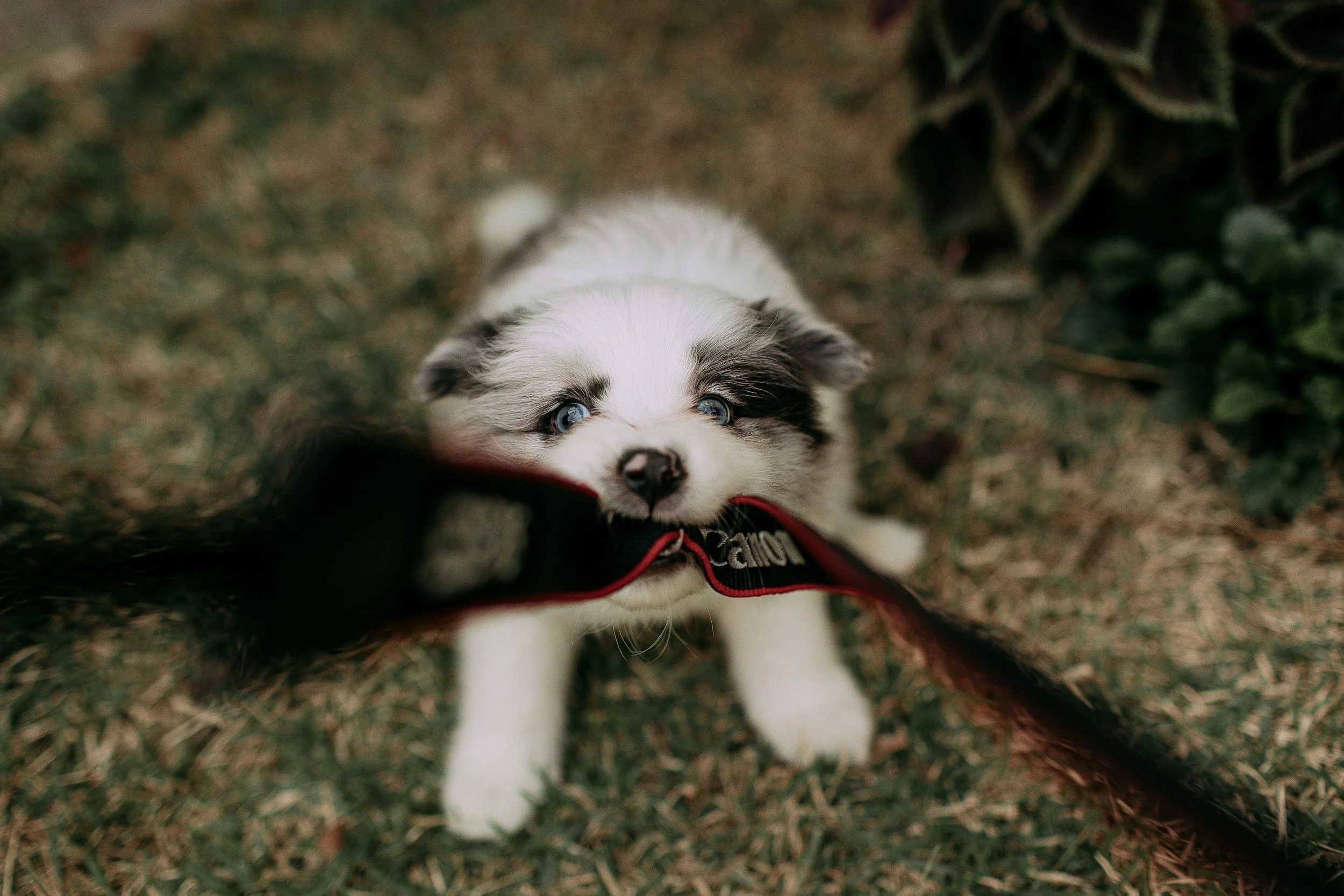
You don’t eliminate the need to chew.
You redirect it.
Trying to suppress biting without giving your puppy a proper outlet usually leads to frustration and more intensity.
Instead, we teach puppies:
What they CAN bite.
1. Redirect Immediately
When your puppy goes for hands, clothes, or ankles:
Calmly interrupt.
Immediately offer an appropriate chew toy.
Engage them with that toy.
Timing matters.
The redirection must happen the second the unwanted biting starts — not after they’ve already escalated.
Consistency builds clarity.
2. Provide Enough Appropriate Chew Options
Many puppies bite excessively simply because they don’t have enough approved outlets.
We recommend:
Durable rubber toys
Age-appropriate teething toys
Safe long-lasting chews
Rotating options to keep interest high
If the only “fun” thing available is your hand, that’s what they’ll choose.
Set them up to succeed.
3. Manage Overstimulation
Most biting escalates when puppies are:
Overtired
Overexcited
Under-structured
If biting suddenly ramps up, ask:
Has the puppy had enough rest?
Have they had structured activity today?
Are they getting too amped up during play?
Sometimes the solution isn’t more correction — it’s better routine.
4. Don’t Accidentally Reward It
Common mistakes we see:
Waving hands around
High-pitched reactions
Turning it into a game
Pushing the puppy away (which feels like play)
To a puppy, movement = engagement.
Calm, clear redirection is far more effective than dramatic reactions.
What If It’s Not Improving?
Most puppies improve quickly when:
They have structure
They have appropriate outlets
The household is consistent
But if biting is:
Escalating
Breaking skin frequently
Paired with guarding behavior
Not improving with maturity
It may be time for professional guidance.
Early training prevents bigger issues later.
Why We Don’t Post Advanced Correction Techniques Online
You’ll notice we focus on foundation and redirection here.
That’s intentional.
Every puppy is different:
Breed tendencies
Drive levels
Sensitivity
Household environment
Owner experience
You can follow “perfect” online advice and still struggle if it’s not the right approach for your specific dog.
That’s why real progress comes from assessment and a tailored plan — not generic internet tips.
Serving Huntsville & Nashville Puppy Owners
We help puppy owners in Huntsville and Nashville build calm, structured, confident dogs from the start.
Puppy biting is normal — but leaving it unaddressed creates habits that are harder to break later.
If you want clarity, structure, and a plan designed for your specific puppy, we’re here to help.
